
Case study · Air source heat pump + solar PV + battery storage
Oil out, renewables in — a full transformation in Beauly.
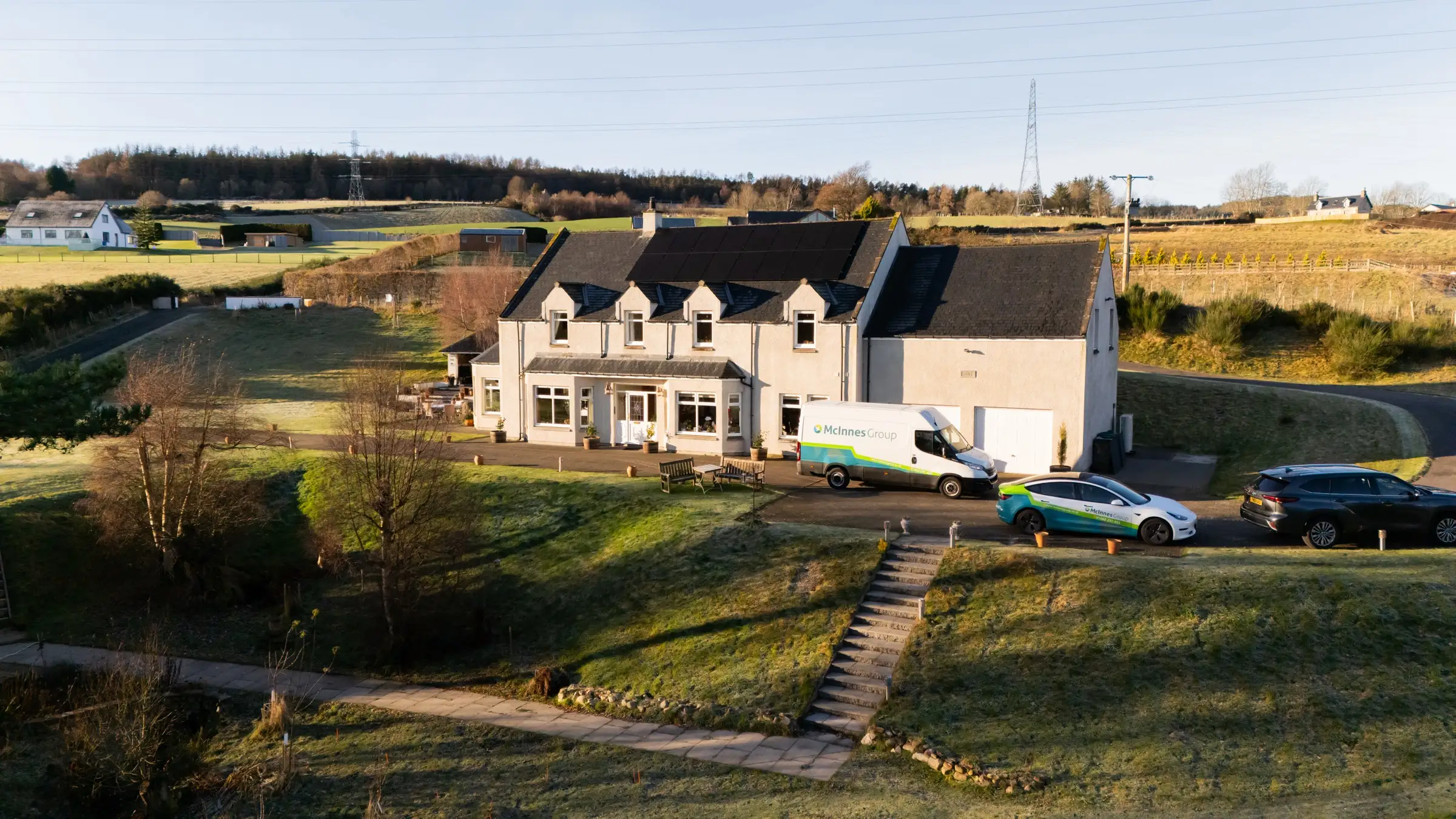
An oil-heated Highland home, fully transitioned to renewable energy: a 14kW Mitsubishi air source heat pump for heating and hot water, an east-west split solar PV array across two roof faces, and a battery system to store and shift generation. One co-ordinated install, one project, one design.
- Location
- Beauly, Inverness-shire
- System
- 14 kW Mitsubishi ASHP · East-west split solar PV · all-in-one battery storage
- Replaced
- Oil boiler
- Installed
- 2025
The starting point
An old oil boiler and rising fuel costs.
The property is a Highland home in Beauly, Inverness-shire — one of the many off-gas Scottish properties that have historically relied on oil for heating and hot water. The customer wanted out of oil: the running costs were climbing, the tank top-ups were a hassle, and the system was approaching end of life.
They came to us looking not for a like-for-like replacement, but for a properly integrated renewable system that would handle heat and hot water year-round, generate electricity from the roof, and store enough to shift the bulk of the home's daily demand away from peak grid hours.
What we installed
Three technologies, sized as one.
14 kW Mitsubishi air source heat pump for heating and hot water, sized to the building's actual heat loss rather than a rule-of-thumb. The old oil boiler and tank were decommissioned and removed.
East-west split solar PV array — two large panel arrays, one on each roof face. East-west splits generate across a broader span of the day than a single south-facing array (peak in the morning on the east face, late afternoon on the west), which pairs better with a typical household demand curve and with the heat pump's longer running windows.
An all-in-one battery storage system to capture surplus solar and shift it into evening and overnight demand. With smart-tariff integration the battery also charges from off-peak grid windows when solar is short — useful through Highland winter.
Everything was designed together: the heat pump's electricity draw, the array's generation profile, and the battery's capacity were all sized in the same survey so the three systems work together rather than fighting each other.
The outcome
Off oil, on renewables.
The home came off oil entirely. Heat and hot water now run on the heat pump, the roof carries a meaningful share of the household's electricity, and the battery shifts that generation into the evening and overnight — so far less of the day's demand is drawn from the grid at peak times.
The result the owner was after was independence from oil deliveries and a home that leans on its own generation first: greater day-to-day self-sufficiency and lower running costs than the oil system it replaced, with the three technologies working as one rather than as separate add-ons.
The services
Considering a whole-home renewable transition?
Three pages worth reading together — we'd want to talk through all three at a first conversation rather than treat them as separate decisions.
Get in touch
Tell us about your project.
We'll be in touch within one working day. No call-out fee, no obligation.
Thanks
We'll be in touch within one working day.
If it's urgent, call us on 01463 231 423 — Monday–Friday, 08:00–17:00.
Prefer to talk? Call 01463 231 423 or email info@mcinnesgroup.co.uk.